One provider from application to final, whether you are a single company handing off permitting entirely or a group running twenty-five companies. Under Florida Statute 553.791 our inspection is the required inspection, so there is no county scheduling window and no crew standing on site waiting for an inspector who may not come today.
We prepare and file the application within one business day, answer rejection comments and track it to issuance.
Licensed plans examiners review against the Florida Building Code in one to two business days.
Your tech records a guided video walkthrough and a licensed inspector reviews it immediately.
Hand off permitting, plan review and inspections completely. No in-house coordinator, and no learning a new building department every time you work in a new county.
Every company on the same process, the same checklists and one account, with reporting by company and branch. We come to each new office to get the team started.
For multi-brand operators →Workflow software helps your team push permits through the county. Inspektr replaces the county’s part of the job. Under Florida Statute 553.791 our licensed professionals perform the plan review and the inspections the building department would otherwise perform, and our permit techs file and track the permit. Our result is the legal result.
Package prepared, jurisdiction forms assembled, filed within one business day, rejection comments answered, tracked to issuance. Your office stops learning 67 building departments.
Permit submission →Plan review against the Florida Building Code in one to two business days. The building department then checks forms and documents for completeness only, on a 10 business day clock.
Plan review →Your tech records a guided video walkthrough and a Florida-licensed inspector reviews it immediately against a standardized code checklist. It is the required inspection, not an extra one.
How inspections work →| Workflow software | Inspektr | |
|---|---|---|
| Who files the permit? | Your staff, using the tool | Our permit techs |
| Who reviews the plans? | The county, in its queue | Our licensed plans examiners, in 1 to 2 business days |
| Who performs the inspection? | A county inspector, on the county’s schedule | Our licensed inspector, the day the work is done |
| What you are buying | A tool your team operates | The work, done |
Most of our plans examiners, inspectors and permit techs have worked inside a Florida building department.
The standard is the same Florida Building Code either way. What changes is who holds the queue and how long they are allowed to hold it.
County timelines vary by jurisdiction and season. Statutory deadlines are from F.S. 553.791 as amended July 1, 2026. Calculate a deadline →
A single company can hand the whole job to us and stop running permitting in-house. A group that grows by acquisition can put every company it owns on the same provider, the same checklists and the same record, instead of inheriting a different process with every deal.
Every company and branch in one account, with reporting by company, branch and county. Permit cycle times become comparable instead of anecdotal.
We handle the permit, the plan review and the inspections, so you do not need a permit coordinator, and working in a new county no longer depends on hiring someone who knows its building department.
When you buy a company, our account managers go to its office and walk the team through the process: how it works, what changes for them, and how much time and effort it saves. The company keeps its name, license and customers, and is onboarded in 2 to 4 weeks.
Every inspection timestamped on video and kept for 10 years, every permit tracked to closeout. Open permits get closed on a statutory clock instead of found in a lender review or a sale.
The permit costs a few hundred dollars. What it gates is a crew. A job cannot start until the permit issues, cannot move until the inspection passes, and cannot be invoiced until it closes out. Every day of latency is capacity you have already paid for and cannot sell, and across a multi-brand operation it compounds by every crew you run.
Crews waiting on a scheduled county inspection window are the largest recoverable capacity in most trade operations. Removing the window converts that into additional completions per crew per week, with no hiring.
Final invoicing waits on permit closeout. Open permits aging at 30, 60 and 90 days are revenue recognized and not collected. Compressing closeout pulls cash forward across every open job at once.
The jurisdiction may not charge plan review or inspection fees for work a private provider performs, and on commercial projects must cut the permit fee by at least 25 to 50 percent. Customers typically see reductions of 25 to 85 percent.
Under F.S. 553.791 a permit application the jurisdiction does not act on in time is deemed approved as a matter of law, and an unanswered certificate of occupancy request is automatically granted. Those are rights, not favors.
Visibility
We do the work. The portal is how you watch it happen, and the app is how your techs and subs record inspections on the phone already in their pocket.
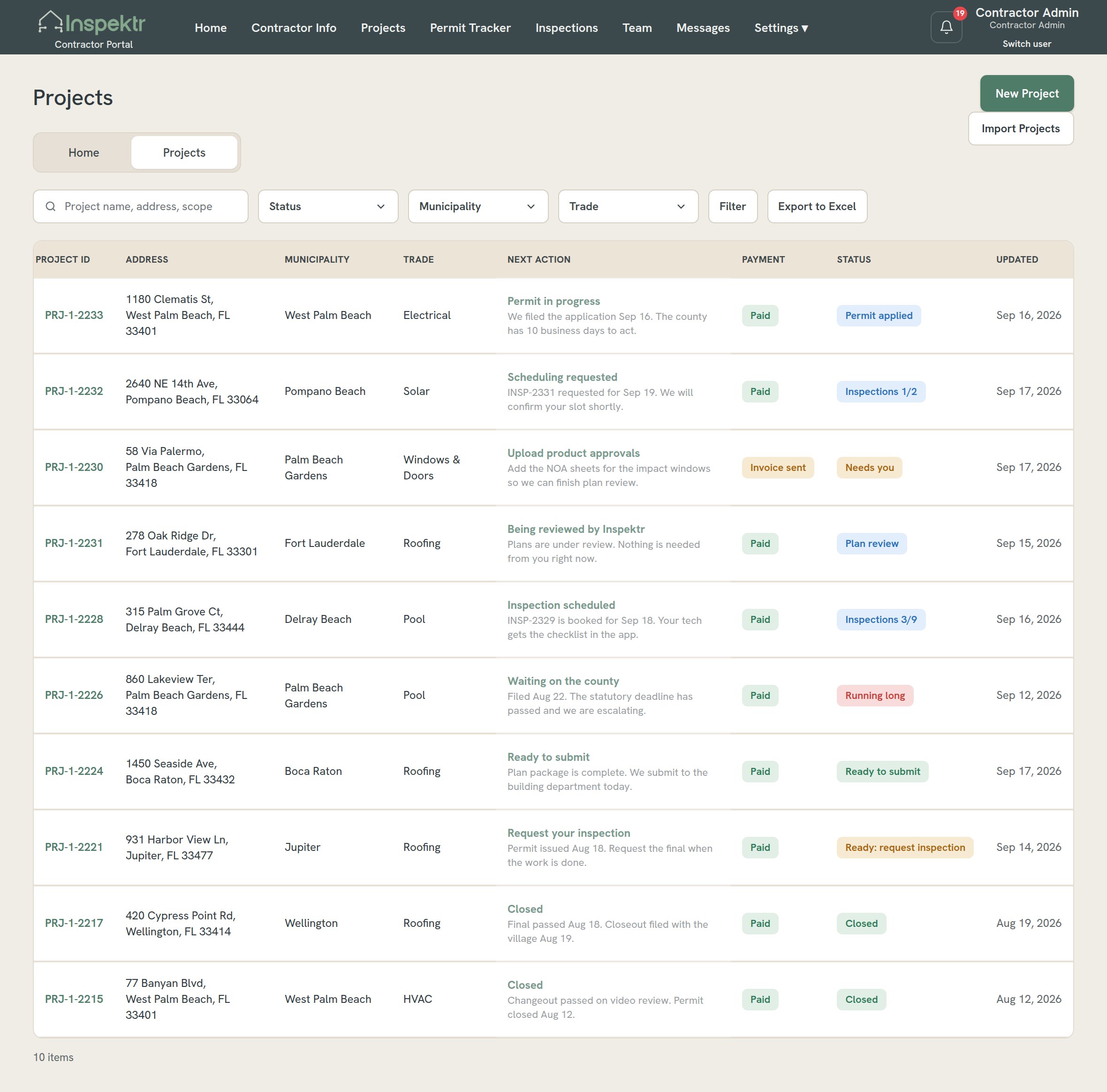
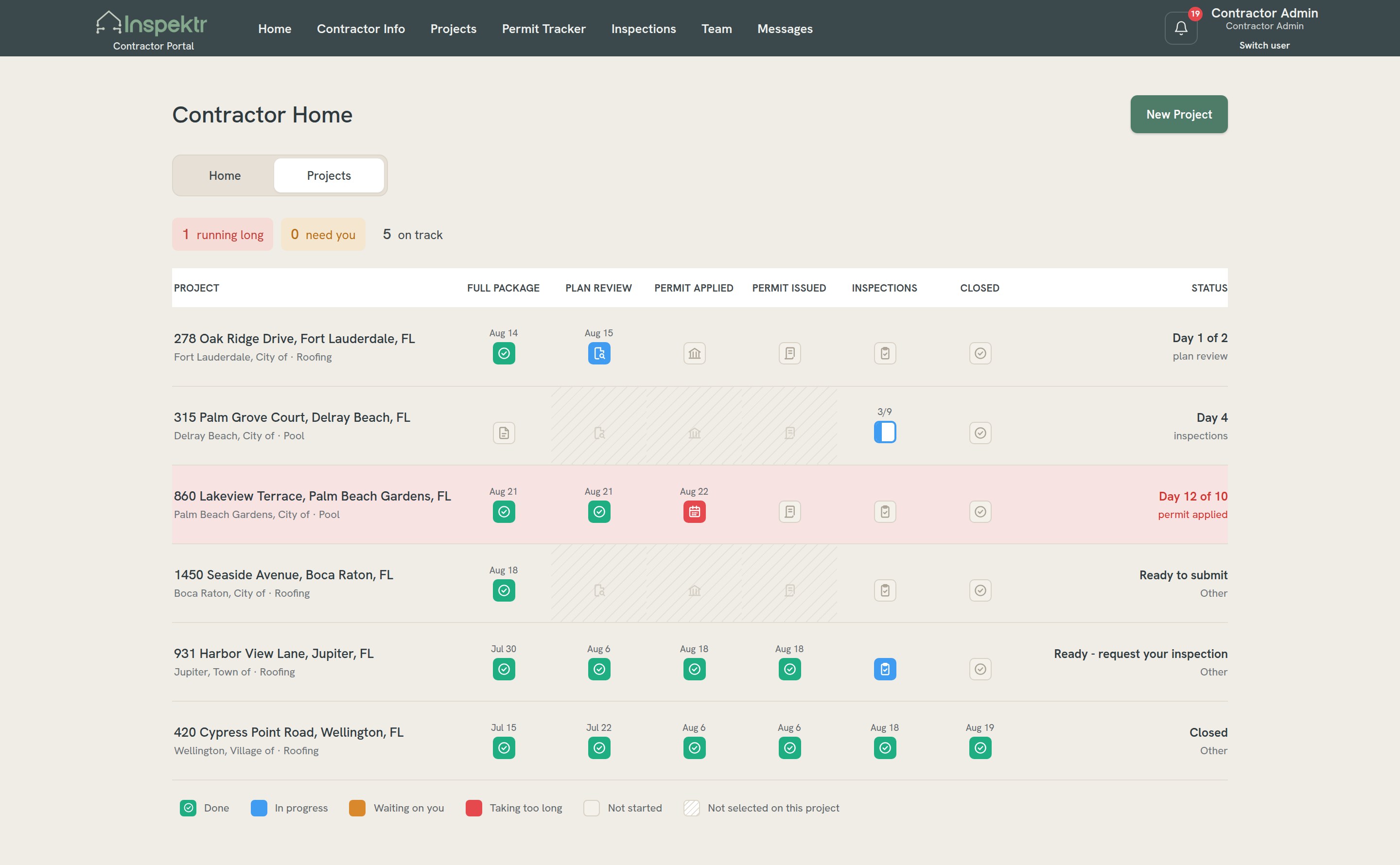
Each project moves across the same six stages: full package, plan review, permit applied, permit issued, inspections and closed.

Every project lists its next action, who has it, payment status and how long it has been in its current stage.

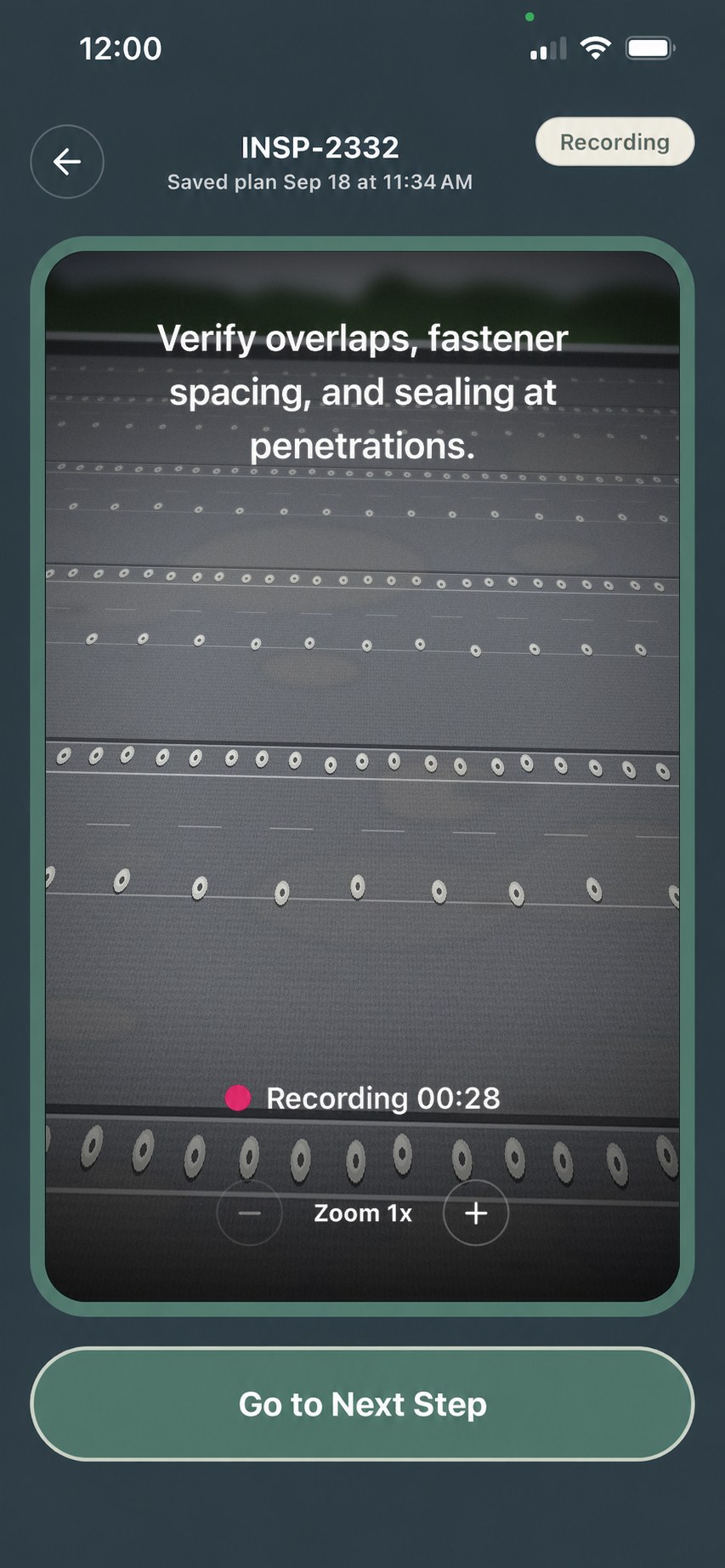
The app walks the technician through each checklist item on camera, one prompt at a time, for the trade and inspection type.

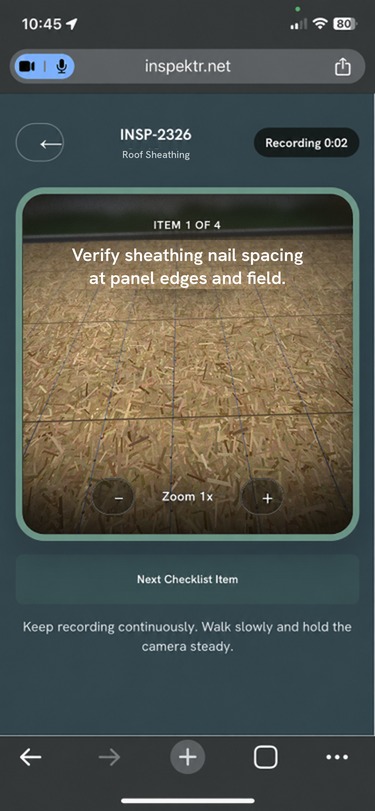
Send a sub or a new hire a link. It opens the same guided checklist in their phone’s web browser.

CS/CS/HB 803, enacted as chapter 2026-63, Laws of Florida, renumbered nearly every subsection of F.S. 553.791 and changed what jurisdictions are allowed to do. Private providers have been part of Florida law since 2002, and the 2026 rewrite made the framework stronger, not weaker. Most of what is published online still describes the old version.
If your crews do the same scope over and over across multiple counties, the permitting overhead compounds in a way it does not for a general contractor doing one custom project at a time.
Inspektr is registered as a private provider across Florida and files into county and municipal building departments statewide. For a multi-branch operator that means entering a new market does not require a new permitting relationship, and it does not require finding a coordinator who already knows that building department.
Every Florida county. The statutory process and the deadlines are identical in all of them, because F.S. 553.791 is state law rather than a local program.
Inspektr is a Florida private provider. We prepare and submit building permits, perform building code plan review, and perform the inspections, under Florida Statute 553.791. All three run on one project record, in every Florida county, so nothing waits in a handoff between vendors.
No. Inspektr is a licensed Florida private provider. Our permit techs file your permits, our licensed plans examiners review your plans, and our licensed inspectors perform your inspections. The portal and app are how your team submits work and sees status. What you are buying is the work itself.
Yes. One account covers every brand and branch, with reporting by brand, branch and county. Each brand keeps its own name, license and customers.
Two to four weeks. We start with a demo call, run ten test permits through the full process, then complete onboarding for the whole company. For a company you acquire, our account managers also go to its office to walk the team through how the process works and how it saves them time and effort.
Not as a direct integration yet. Projects can be entered in the portal or imported in bulk, and project data exports to Excel for your own reporting.
Yes. Under Florida Statute 553.791, a private provider inspection is the required inspection rather than an additional one. Section 553.791(16)(a) allows the local building official to inspect construction a private provider found compliant only where the official has knowledge that the private provider did not perform the required inspections, and requires written notice of the facts relied on before doing so.
Yes. The private provider framework is Florida state law, not a local program. Section 553.791(23) provides that a local government, enforcement agency, building official and code enforcement personnel may not prohibit or discourage the use of a private provider. Inspektr is registered as a private provider across Florida.
Permit packages are submitted within one business day of our having what is needed to file. Plan review runs in one to two business days. Inspections happen on demand rather than in a scheduled window. After that the statutory clocks apply: the building official has 10 business days to act on a permit application, or 5 for a single-trade review on a one or two family dwelling, and a certificate of occupancy request must be answered within 10 business days, or 2 for one and two family dwellings.
No. Section 553.791(19)(c), effective July 1, 2026, provides that a local enforcement agency may not prohibit or limit private providers from using virtual inspections where a virtual inspection is not prohibited by any applicable code.
For commercial construction projects, Florida Statute 553.791(2)(d) requires the jurisdiction to reduce the permit fee by at least 25 percent of the portion attributable to plan review or inspection services, and by at least 50 percent where a private provider performs all required services. An agency that fails to apply the reduction forfeits the ability to collect any fees for that project. On all projects, section 553.791(2)(b) bars the jurisdiction from charging plan review or inspection fees where a private provider performs them.
No. A guided workflow tells the technician exactly what to capture, with a trade-specific checklist. Technicians who will not download an app, or who do not speak English comfortably, can be sent a one-time guest link that opens in a mobile browser with no install.
HVAC, roofing, solar, pool, electrical, plumbing, windows and doors, generators, water heaters, EV chargers, screen enclosures and garage doors. The model fits highest where a contractor repeats the same install at volume across multiple markets.
Trades, brands, county footprint, monthly volume, and where jobs currently stall. We will walk you through what moves and what it is worth.